Shadow of a Doubt and Stoker
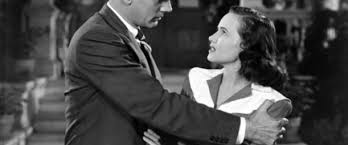
Hitchcock’s 1943 release Stoker was one of his first few after signing his contract with David O. Selznick years prior. It involves a family living in suburban “bliss” until the mother’s brother, “Uncle Charlie” shows up. With the daughter of the same name stuck in a rut, she couldn’t be more excited to have the unexpected visitor. Young Charlie is quickly enamored with Uncle Charlie, and the two begin to get close. Suddenly, two detectives show up undercover and begin asking questions. They eventually pull Charlie aside to tell her their purpose and gather more information. She initially doesn’t believe her uncle could do the things he’s been accused of, but doubt begins to creep into her mind. She snoops around his things, and begins to get more and more suspicious. She eventually realizes that her uncle is the “Merry Widow Strangler” they’ve been looking for. The cops have narrowed it down to two people, and are waiting for a picture of Uncle Charlie to potentially be ID’d. The other suspect dies running, making him look guilty and getting Uncle Charlie off the hook. Young Charlie feels terrible and wants to get her uncle to leave without her mom finding out the circumstances in order to protect her. She eventually forces him to leave but as she is saying goodbye on the train, her uncle won’t let her go. After a long struggle, Uncle Charlie falls off the train, passing away before anyone else could find out the truth. Eventually the detective finds out, but it never makes it’s way back to the town that revered him, or his adoring sister.
Stoker, the 2013 release of South Korean filmmaker Park Chan-Wook, tries to pay homage to this Hitchcock classic. A small town suburban family is shaken up the day that Uncle Charlie shows up. In this film, Uncle Charlie shows up the day the father of the family, his brother, dies. Charlie charms the mother, but the daughter is very skeptical. Much like Shadow of a Doubt, the daughter begins to uncover the fact that Charlie has murdered a few people. Where it strays in this one is the daughter, India, kills a man in self defense with Charlies help. At the end of the movie, instead of Charlie leaving, he tries to kill the mother, and run away to New York with India. India uses her hunting background and shoots Charlie. She then runs away, and intentionally speeds to attract the cop that was snooping around. She gruesomely kills him, and the movie ends.
Stoker is very much based on Shadow of a Doubt. In some ways Chan-Wook builds suspense better than Hitchcock, but that is only due to superior technology and musical evolution. If both were presented the same tools, Hitchcock would blow Chan-Wook out of the water. The music in both films plays a major role. Hitchcock has his typical score, of alternating mood music to accompany the rollercoaster rides that are his plots. In Stoker, one device I thought was very useful in the building of suspense was the metronome. The movements are synced up to it, and it gives the audience a very eerie vibe. While obviously much more modernized, the soundtrack of Stoker paid homage to the essence of Hitchcock scores.
One area that Chan-Wook built off of Hitchcock was in the sexuality of the film. In Shadow of a Doubt, there is a lot of sexual tension between the mother and her brother. The way they talked and looked at each other provided a very palpable tension. In Stoker, the tension is acted upon. The second half of this film is hyper-sexualized in many ways. The mother hooks up with her brother in law, yet there is also tension with Charlie and India. In a very strange and perverted scene, after Charlie helps India kill a man, India begins masturbating to the images of her classmate losing his life. There is a lot that is messed up about Stoker. The ties between sex and death are very strange. Also, both movies fetishize choking, as that is the preferred method of killing for both Uncle Charlies. There are scenes in each film where they put their hands up and fantasize choking a female character.
Stoker took many plot elements from Shadow of a Doubt. From the literal character Uncle Charlie, to the family dynamic, to the overall theme, the film could almost be called Shadow’s sequel. Chan-Wook also took Hitchcock’s covert tensions and overtly displayed them, in often unsettling ways. While these two films are definitely not my favorite, the way they intertwine and intersect is very interesting. Stoker does not quite hold up to Shadow of a doubt, but it was interesting to see how Chan-Wook tried to harness his inner Hitchcock.
Research Questions
Group Question: “How are the romantically involved, younger female protagonist represented in Strangers on a Train and how does it compare to women in his other films?”
For Hitchcock, Many of his stories that I have seen to this point have been female centered. For example, Rebecca follows around the new Mrs. de Winter in her new life or in Psycho the beginning follows Marion Crane on her journey. Strangers on a Train follows Bruno and Guy. The female characters are secondary, and while they drive the plot (Guy’s divorce from Miriam and interest in Anne) they are not the focus of the film. While Miriam is a victim of murder, she is also an antagonist which is an interesting relationship worth exploring.
“How effective is Hitchcock’s use of diegetic sound in order to build tension?”
I feel like Strangers on a Train uses less non-diegetic sound in its efforts to build the tension. In many of Hitchcock’s other films, the orchestra added in later always plays an extremely prominent role, yet in Strangers on a Train, it seems less important. He relies on other devices like the tennis match. The quick cuts and back and forth motion work with the lack of available time to build extreme suspense at the end of the film. The repeated rhythmic sound of the ball is almost eerie. It works very well and finding out why (or if this departure from orchestral tension was intentional) Hitchcock decided to go about making Strangers on a Train in this manner.
 MVC 201 Blog